Showing posts with label Gay History. Show all posts

Thursday, August 28, 2014

Queen pardons gay codebreaker Alan Turing

Britain’s Queen Elizabeth II this week granted a Royal pardon for internationally acclaimed British codebreaker and computer scientist Alan Turing, who took his own life in 1954 after being convicted two years earlier of having consensual sex with a 19-year-old male.
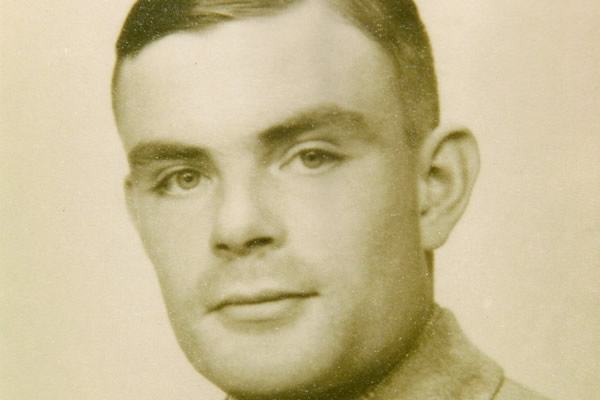
The pardon came more than a decade after gay activists and straight allies lobbied the British government for a posthumous pardon for Turing, saying his conviction on a charge of “gross indecency” was an injustice even though gay sex was considered a crime at the time under British law.

“Alan Turing was a remarkable man who played a key role in saving this country in World War II by cracking the German Enigma code,” The Telegraph newspaper quoted British Prime Minister David Cameron as saying.

“His action saved countless lives. He also left a remarkable national legacy through his substantial scientific achievements, often being referred to the as father of modern computing,” the newspaper quoted Cameron a saying.

Cameron was referring to Turning’s groundbreaking work for one of Britain’s intelligence agencies during World War II in which he applied his own research on information processing – considered a forerunner to modern computer science — to devise a means of breaking the code used by German submarines to attack and sink British ships.

Turning, who continued his research after the war, is widely considered by computer experts to have developed the foundation for high tech devices such as smart phones.

A British Broadcasting Company history report on Turing’s life says Turing was arrested, tried and convicted in 1952 on the homosexuality related charge. Other news reports from the British press say the arrest came after Turing called police to report that a 19-year-old male with whom he at one time had a relationship broke into his house.“He made a huge impact on the world he lived in and left a legacy for the world of today and tomorrow,” The Telegraph quoted Iain Steward, a Conservative Party member of the British Parliament, as saying. “This Royal pardon is a just reward for a man who was stripped of his honor, his work, and the loyalty he showed his nation.

The admission prompted police to file the gross indecency charge. Authorities later gave Turing a choice of imprisonment or hormonal treatment to eliminate his sexual drive that activists have called “chemical castration.” Turing chose the latter.

The conviction, among other things, resulted in Turing being stripped of his security clearance, preventing him from continuing his work on code breaking and related fields for one of his country’s top intelligence agencies.

He was found dead on June 7, 1954. An autopsy and toxicological tests showing he died of cyanide poisoning. A half-eaten apple was found next to his bed, according to the press reports.

A June 2012 BBC report says the apple wasn’t tested to determine if it was laced with cyanide, as had been speculated since the time of Turing’s death, and that it might be possible that the death was an accident. The BBC reported that Turing had been using cyanide for experiments he had been conducting at his home.

A spokesperson for the British Embassy in Washington said the Queen announced last December her intent to grant Turing the pardon. The spokesperson, James Harris, said the Queen put the pardon in place officially on Tuesday, Aug. 19.

“Now know ye that we, in consideration of circumstances humbly represented to us, are graciously pleased to grant our grace and mercy unto the said Alan Mathison Turing and grant him our free pardon posthumously in respect of the said convictions,” the pardon states.

Wednesday, August 20, 2014

Park Service Focusing On LGBT Heritage To Diversify Program

  (Source:Nicole Wiesenthal)

Jamie Nickel spends her days telling tourists about the marvels of Glacier National Park. A native Californian with long, golden blonde hair, Nickel, 25, came to Montana for the summer to drive one of Glacier's historic red buses.

It's the perfect match. She enjoys the outdoors and likes to hike, fish and kayak, and Glacier gets a friendly face with an easygoing personality to interpret the park's many wonders.

So when word spread over the summer that the National Park Service was conducting an LGBT heritage initiative, Nickel, a lesbian, was thrilled to see the agency involved.

"Gay rights have come a long way just in the last few years," she said. "I'm surprised to see it come to this level."

The Park Service's plan is to identify locations that are significant to the history of America's gay, lesbian, bisexual and transgender communities and protect those places for future generations to enjoy and remember. The U.S. Department of Interior made the announcement in May at the Stonewall Inn in New York City; Secretary Sally Jewel announced the park service's new efforts to include stories of LGBT Americans National Park Service programs.


People widely regard the Stonewall Inn, where riots exploded in 1969, as the birthplace of the American gay rights movement; the new program might protect and preserve the area for future generations. Presently, four LGBT-themed locations are included in the National Register of Historic Places. They are: The Dr. Franklin E. Kameny Residence in Washington, D.C., the Cherry Grove Community House and Theatre on New York's Fire Island, the James Merrill House in Connecticut and the Carrington House on Fire Island (where author Truman Capote penned his famed novella, "Breakfast at Tiffany's").

With the help of the National Park Service's study, more places will soon be added.

"In 2016, the National Park Service will celebrate its centennial, and our goal is to expand the stories that we tell to represent the diversity of the American experience and to make history more relevant to all Americans," said NPS director Jon Jarvis.

For Nickel, driving one of Glacier's iconic red buses offers an opportunity to tell those stories. For years the job of being a red bus driver, or Jammer, as it's called locally, usually went to college-aged men. As a young woman and a lesbian, Nickel is breaking ground in a staunchly conservative section of the country.

"It is challenging here (Montana) because you never really know who is accepting of you," she said. "But, I love nature, and the recreation is awesome."

The National Park Service is expanding in all areas. In cooperation with the study, the National Trust for Historic Preservation is seeking to diversify its portfolio by adding treasures of importance to the LGBT community. To recommend an endangered American LGBT property for future research, please visit www.savingplaces.org.

Tuesday, July 15, 2014

FLASHBACK: Anita Bryant Launches America's First Major Anti-Gay Campaign

Someone has dug into the archives once more and compiled more than hour of historical news footage about Anita Bryant's anti-gay campaign in Florida. From the clip description:
Featuring gay rights activists Bob Kunst, Leonard Matlovich, Jack Campbell, Ruth Shack & Melodie Moorehead. Save Our Children, Inc. was a political coalition formed in 1977 in Miami, Florida to overturn a recently legislated county ordinance that banned discrimination in areas of housing, employment, and public accommodation based on sexual orientation. The coalition was publicly headed by celebrity singer Anita Bryant, who claimed the ordinance discriminated against her right to teach her children biblical morality. It was a well-organized campaign that initiated a bitter political fight between unprepared gay activists and highly motivated Christian fundamentalists. When the repeal of the ordinance went to a vote, it attracted the largest response of any special election in Dade County's history, passing by 70%. Save Our Children was the first organized opposition to the gay rights movement, whose beginnings were traced to the Stonewall riots in 1969. The defeat of the ordinance encouraged groups in other cities to attempt to overturn similar laws. In the next year voters in St. Paul, Minnesota, Wichita, Kansas, and Eugene, Oregon overturned ordinances in those cities, sharing many of the same campaign strategies that were used in Miami. Save Our Children was also involved in Seattle, Washington, where they were unsuccessful, and heavily influenced Proposition 6—a proposed state law in California that would have made the firing of openly gay public school employees mandatory—that was rejected by California voters in 1978.
This clip is especially timely as Florida draws close to achieving marriage equality. Watch and see how anti-gay language has scarcely changed in nearly 40 years:

Sunday, June 29, 2014

The Foot Wore A Spiked Heel

It was 45 years ago this week that the queer community of New York City finally said "Enough!" For some historical perspective, I'm posting the story that the New York Daily News ran one week after the Stonewall Riots. Note how the story drips with condescension and ridicule. We've come a long, long way in 45 years and we've still got some distance to cover, but today we should all offer up a shout and a snap to the people who started us down this road.
HOMO NEST RAIDED - QUEEN BEES ARE STINGING MAD
-by Jerry Lisker, New York Daily News, July 6th 1969 
She sat there with her legs crossed, the lashes of her mascara-coated eyes beating like the wings of a hummingbird. She was angry. She was so upset she hadn't bothered to shave. A day old stubble was beginning to push through the pancake makeup. She was a he. A queen of Christopher Street.
Last weekend the queens had turned commandos and stood bra strap to bra strap against an invasion of the helmeted Tactical Patrol Force. The elite police squad had shut down one of their private gay clubs, the Stonewall Inn at 57 Christopher St., in the heart of a three-block homosexual community in Greenwich Village. Queen Power reared its bleached blonde head in revolt. New York City experienced its first homosexual riot. "We may have lost the battle, sweets, but the war is far from over," lisped an unofficial lady-in-waiting from the court of the Queens.
"We've had all we can take from the Gestapo," the spokesman, or spokeswoman, continued. "We're putting our foot down once and for all." The foot wore a spiked heel. According to reports, the Stonewall Inn, a two-story structure with a sand painted brick and opaque glass facade, was a mecca for the homosexual element in the village who wanted nothing but a private little place where they could congregate, drink, dance and do whatever little girls do when they get together.
The thick glass shut out the outside world of the street. Inside, the Stonewall bathed in wild, bright psychedelic lights, while the patrons writhed to the sounds of a juke box on a square dance floor surrounded by booths and tables. The bar did a good business and the waiters, or waitresses, were always kept busy, as they snaked their way around the dancing customers to the booths and tables. For nearly two years, peace and tranquility reigned supreme for the Alice in Wonderland clientele.

The Raid Last Friday
Last Friday the privacy of the Stonewall was invaded by police from the First Division. It was a raid. They had a warrant. After two years, police said they had been informed that liquor was being served on the premises. Since the Stonewall was without a license, the place was being closed. It was the law.
All hell broke loose when the police entered the Stonewall. The girls instinctively reached for each other. Others stood frozen, locked in an embrace of fear.
Only a handful of police were on hand for the initial landing in the homosexual beachhead. They ushered the patrons out onto Christopher Street, just off Sheridan Square. A crowd had formed in front of the Stonewall and the customers were greeted with cheers of encouragement from the gallery.
The whole proceeding took on the aura of a homosexual Academy Awards Night. The Queens pranced out to the street blowing kisses and waving to the crowd. A beauty of a specimen named Stella wailed uncontrollably while being led to the sidewalk in front of the Stonewall by a cop. She later confessed that she didn't protest the manhandling by the officer, it was just that her hair was in curlers and she was afraid her new beau might be in the crowd and spot her. She didn't want him to see her this way, she wept. 
Queen Power 

Saturday, May 31, 2014

Here is a Comprehensive Supercut of News Clips from the First Decade of the AIDS Crisis

Brokaw
HBO's broadcast of The Normal Heart has caused new reflection on the early days of the AIDS crisis, and the fear, ignorance, lack of understanding, and anger that were the hallmarks of that era.

If you care to revisit it, an intrepid newshound Dave Evans has assembled an hour's worth of clips from 1982-1992 covering everything from the first discovery of the disease to Rock Hudson's death, to the ACT UP demonstrations.

Let's hope nothing like it ever happens again.

Thursday, May 8, 2014

As gay marriage turns 10, enough credit to go around

THE MOVEMENT for same-sex marriage in the United States has racked up victory after victory in the last few years, so much so that a scramble for credit may have been inevitable. A new book about the movement, “Forcing the Spring” by New York Times reporter Jo Becker, has inflamed longtime activists with its close focus on the high-profile legal challenge to California’s Proposition 8. Most controversially, the opening lines of the book put forth Chad Griffin, the former Bill Clinton political operative who organized the Prop 8 challenge in 2009 and later lobbied President Obama to change his position to support same-sex marriage, as the movement’s Rosa Parks.
In fact, there’s plenty of credit to go around, as a somewhat red-faced Griffin himself detailed in a recent op-ed. And if anything, the back-and-forth over “Forcing the Spring” has shone a new light on all those whose years of patient, often thankless legal work brought gay marriage first to Massachusetts, then to a growing roster of other states.
Much of the heavy lifting on the issue occurred in New England — at Harvard Law School, where in 1983 a student named Evan Wolfson wrote a thesis laying out the legal arguments for what came to be called marriage equality; in the Vermont Supreme Court, where justices concluded that gay couples were entitled to the legal benefits of civil marriage; and most crucially in the Supreme Judicial Court in Massachusetts, whose favorable ruling, in a suit by lawyer Mary Bonauto and the Boston-based Gay and Lesbian Advocates and Defenders, led to the nation’s first bona fide same-sex marriages 10 years ago this month.
Through these efforts, the legal framework for a national marriage movement emerged: When gay marriages in Massachusetts soon proved uneventful, affecting essentially no one but the happy spouses involved, judges and legislators in other states were emboldened to follow suit; when legally married couples were denied federal rights, the constitutionality of the federal Defense of Marriage Act came under intense scrutiny.
The Proposition 8 case, to be sure, was much flashier. It starred Ted Olson and David Boies — two renowned superlawyers, recruited by Griffin, who were most famous for arguing on opposite sides of Bush v. Gore in 2000. Their ultimate goal was a sweeping US Supreme Court decision establishing the right to marriage in all 50 states. The case didn’t end that way; less dramatically, the court last year invalidated Proposition 8 only, and did so on technical grounds. As courts from Utah to Kentucky have struck down gay-marriage bans in recent months, they’ve relied heavily on a different US Supreme Court case that struck down the Defense of Marriage Act and drew heavily on GLAD’s efforts in Massachusetts.
Future legal historians are bound to study the movement for same-sex marriage, a once-fringe idea that seemed to catch on and spread in record time. But it won’t be lost on them why that happened: because years of effort in Montpelier, Boston, and elsewhere made it possible.

Thursday, April 24, 2014

Know Your LGBT History - Gilbert Baker and the Rainbow Flag

A lot of folks - myself included - don't know the history of the rainbow flag. In the following video, its creator, Gilbert Baker, gives the lowdown and history on this widely known part of lgbt culture:


Tuesday, January 14, 2014

National Park Service Seeks Nominations For LGBT Historical Landmarks


The National Park Service is seeking nominations of historical LGBT sites and landmarks to be added to the National Register of Historic Places and for consideration to be designated as a National Historic Landmarks.

1964 Gay Protest“We are looking to preserve and protect sites associated with LGBTQ history,” said Alexandra M. Lord, Ph.D., branch chief of the National Historic Landmarks Program.

To date ONLY THREE sites, all on the East Coast, which includes the Stonewall Inn, the Washington, D.C. home of the late gay rights activist Frank Kameny and the Cherry Grove Community House and Theater on Fire Island. In have received federal recognition specifically due to their ties to LGBT history.

One minor problem concerning LGBT historic sites is the fact that many were situated in neighborhoods that have since been gentrified. For federal landmark purposes or listing on the register, a structure must still exist and many have been torn down or altered in such a way that their historical integrity no longer is intact.

The next LGBT historic site designation very likely will be the Henry Gerber House in Chicago. Given city landmark status in 2001, the residence is where Gerber lived in the early 1920s when he formed the Society for Human Rights, the first American gay civil rights organization, according to its listing on the Chicago Landmarks website.

The late great LGBTactivist Supervisor Harvey Milk’s old camera shop and campaign headquarters at 575 Castro Street, in San Francisco is also a property that could receive federal recognition. Currently the Human Rights Campaign owns the property.

For information about the California State Historic Preservation Office, which the park service has asked to assist with identifying LGBT sites to nominate, visit http://ohp.parks.ca.gov/

NOTE: The National Park Service is planning to hold a LGBT-focused webinar later this month. For more information, visit http://www.nps.gov/history/nr/

Thursday, August 1, 2013

Historian Presents Evidence Of Same-Sex Marriage Ceremonies Performed In The Christian Church In 100 AD

Same-sex-union-670x377
Many LGBT rights advocates considered the Pope's recent message of tolerance towards gay priests and Christians to be quite revolutionary, despite what some have argued to the contrary. However, according to historian John Boswell and his seminal book Same-Sex Unions in Premodern Europe, the Christian church has already performed same-sex unions. Granted, it was some centuries ago during the Dark Ages. Nevertheless, io9 reports that:
"There were dozens of records of church ceremonies where two men were joined in unions that used the same rituals as heterosexual marriages. (He found almost no records of lesbian unions, which is probably an artifact of a culture which kept more records about the lives of men generally.)"
The Catholic historian's book was published in 1994, shortly before his death from AIDS. As io9 noted, "given the Church's present-day views on gay marriage, these detractors argued, Boswell's history seemed like wishful thinking." Now, the book is being re-released as an e-book, and finding itself in the spotlight once again. It chronicles much of Boswell's research the he conducted throughout the 1970's and 80's, sifting through legal and church records from throughout the late Roman Empire and Early Christian church.
So why doesn't the Church recognize same-sex unions anymore? Any why are the documents chronicling these same-sex unions just now surfacing centuries later?
"One easy answer is that — as Boswell argues — the Church re-framed the idea of marriage in the 13th century to be for the purposes of procreation. And this slammed the door on gay marriage. Church scholars and officials worked hard to suppress the history of these marriages in order to justify their new definition.
Achilles and PatroclusBefore you start celebrating, though, know that the unions described in these documents don't necessarily mirror the same-sex unions we recognize today. These unions took place in era during which Europe was still transitioning from its last years of the Roman Empire. Thus, these unions most likely reflected the kind of same-sex relationships that existed in Rome. Documents would often refer to the two men as "brothers" rather than "husbands". Annalee Newitz, author of the io9 piece, also noted that "marriages over a millennium ago were not based on procreation, but wealth-sharing." Unions like this were not always sexual in nature. That said, the documents still present evidence that the Early Christian church performed marriage ceremonies between two men.
One legal scholar even "wrote a law journal article explaining that Boswell's book could even be used as evidence for the legality of gay marriage, since it shows evidence that definitions of marriage have changed over time." Most of the individuals who cite religion as their chief objection to marriage equality cite the belief that the Church's current definition supports the same, "natural", divinely inspired definition that it has always had. Boswell's work certainly presents evidence that contradicts that.
Unfortunately, Boswell is no longer around to defend his work. If he was, though, there is no doubt that he would have one or two things to say about the current legal state of same-sex marriage. One can only hope that the release of his work in this much more accessible and cost-effective might allow more people to get their hands on it.

Tuesday, July 30, 2013

New App, 'Quist,' Delivers Gay History Lessons 365 Days A Year

A new app for iPhone and Android is invested in teaching the LGBT community about just how far it has come. Quist, released for download globally today, will teach its users a daily history lesson, ranging from the darkest corners to the brightest high points of LGBT culture, politics, and movements.   Huffington Post reports:

QuistAccording to the app's website:
Historical events in the app paint a picture of how far the LGBTQ community has come over time — how we have been treated, how we have reacted, how our allies have supported us, and how others have worked vehemently to stop the progress. LGBTQ individuals’ contributions to society and events in HIV/AIDS history are also included.
In a time where gay teen suicide is still a devastating reality, Quist (which is available as a free download) cites generating an awareness of past shared struggles for LGBT youth as one of its goals. The app evidences a need for new ways of constructing, remembering and sharing queer history, as the LGBT community continues to make political and social gains and risks forgetting the trajectory that has brought us to this point.
By bringing Stonewall, the Mattachine Society, and other formative queer moments and movements into the new millenium, Quist could be an important new tool for LGBT community building. 

Download it today on your mobile device or online through iTunes or the Play store for Android


Friday, June 28, 2013

One Night in 1969

Every community has its stories. We retell them to remind ourselves of our origins, to note our progress, and to recommit ourselves to each other. We are too wise to believe that one instant in one place in history made manifest our movement for equality. But we can look to the events of June 27-28, 1969 as a moment of tremendous significance -- as a moment when the odds were long against us and we fought back anyway; as a spark -- not the first, not the only, but nevertheless a spark -- which grew into a blaze to burn unjust laws and light the way toward progress. Let us recall the Stonewall Riots.
stonewall.jpgIn 1969, the Stonewall Inn was an unlikely place for revolution. Located in the heart of a blue-collar neighborhood called the West Village near the meatpacking district of lower Manhattan, it was a frequent haunt of lower-income LGBT people as well as drag queens, hustlers, drug addicts, and drug dealers. Across the street, Christopher Park was a cruising spot and home to many LGBT youth. The mafia owned and operated the Stonewall as cheaply as possible, preferring tubs of stagnant water to sinks with running water behind the bar, stealing rather than purchasing liquor, and adding water to stretch the booze. One expense they did not spare was bribe money paid to local police to prevent raids, or at least guarantee advance warning. That was a comfort to patrons who felt somewhat protected from the humiliating and potentially life-ruining raids of police followed by the publication of photos and names in the paper the next day.
In the summer of 1969, the NYPD morals division was informed that gangsters had managed to blackmail high-profile gay men to defraud the government. They were told that the blackmail transactions were conducted at bars in New York City, and the Stonewall Inn was identified as one such bar. Acting on this tip, the NYPD planned a raid based on intelligence that the bar was operating without a license and watering down its liquor. Those tips indicated that local police were likely in collusion with the mafia, so the morals division did not inform the 6th precinct of the raid until the very last minute.
Related Posts Plugin for WordPress, Blogger...